
Indoor Pool
Building an indoor pool turns your home into a private retreat you can enjoy in every season. With a precision-engineered enclosure from COVERS in Play, you get the perfect mix of comfort, efficiency, and style all without complex construction or heavy maintenance. Our systems bring natural light, control humidity, and lower energy use while creating a sleek, modern look that enhances your property. Experience year-round swimming is simple and sustainable.
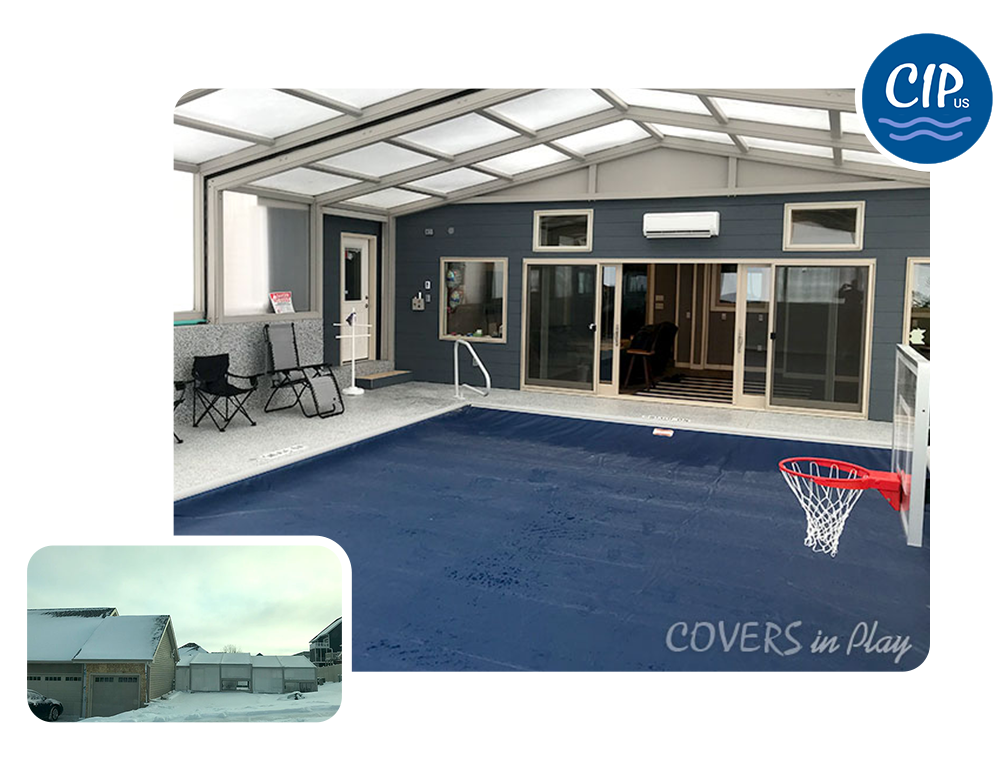
How Much Does it Cost to Build an Indoor Pool?
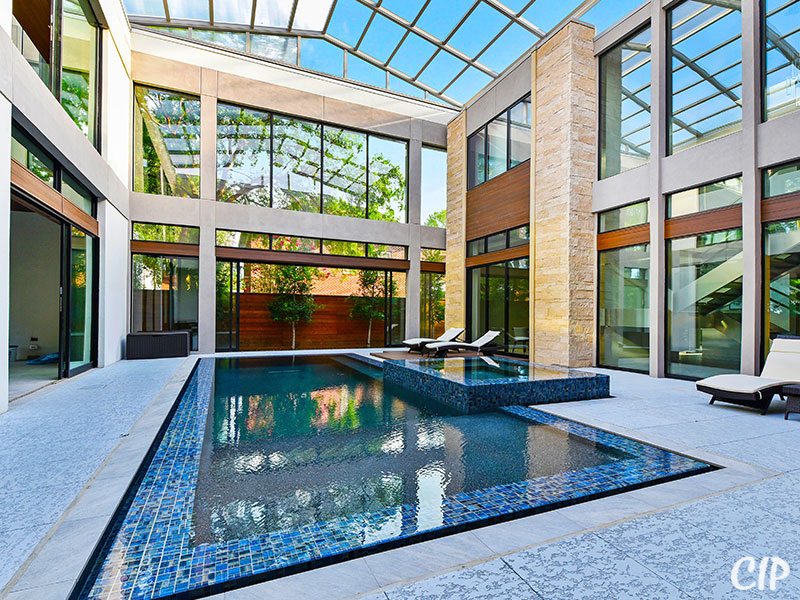
Conventional Indoor Pool Building an indoor pool
Homeowners often ask, “How much does it cost to build indoor pool?” Using conventional construction, the cost to build an indoor pool rises quickly. Without a dehumidification unit, many projects land around $175,000–$300,000.
Add a properly sized dehumidification system and totals typically jump by ~50%, ending near $275,000–$450,000, or roughly $200–$300 per square foot depending on finishes, site work, and mechanical complexity. These figures also shift with pool size, structure type, glazing, and regional labor rates.
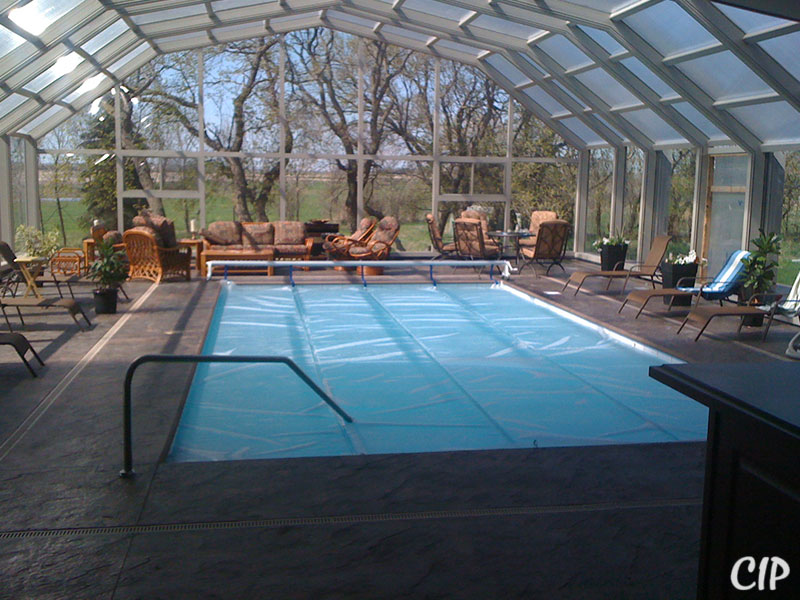
Building an indoor pool enclosure more cost-effectively
Opting for a high-performance indoor pool enclosure can keep budgets under tighter control. With engineered enclosure systems that don’t require a full dehumidification plant, total costs commonly range $125,000–$225,000 (about $150–$200 per sq ft) for many mid-size residential projects.
This approach delivers the year-round comfort you want while streamlining mechanicals and ongoing operating costs.
To plan a durable, low-maintenance result, align your layout and budget early. For guidance that fits your site and vision, reach out to our specialists for a tailored estimate.
The First Step for Building an Indoor Pool
When planning indoor pool building, the ideal time to integrate structure, ventilation paths, and equipment locations is during a new home build or when adding a new inground pool. Early coordination allows clean tie-ins for foundations, utilities, and envelope performance, avoiding costly retrofits later. A common research path is, “how much to build an indoor pool?” or “how much does it cost to build an indoor pool?” The real answer depends on pool dimensions, material choices, enclosure type, and add-ons like heating, air exchange, and humidity control. Whatever your budget, involve a team with proven indoor pool buildings experience; the right expertise pays for itself in longevity and comfort.If long-term efficiency and year-round usability are priorities, upgrading to a Commercial Pool Enclosure offers a scalable, professional solution that delivers clear ROI for larger properties.
Cost to Build an Indoor Pool
From an architectural lens, building an indoor swimming pool can look seamless with the rest of your home, yet long-term performance hinges on moisture and heat management.
Many projects lean on “moisture-resistant” interior materials (e.g., cement boards or water-resistant drywall). Even with dehumidification, these substrates can suffer over time: condensation, mold, corrosion, and premature finish failure drive maintenance costs up.
Humidity also accelerates evaporation, so you’ll juggle both air and water temperatures to maintain comfort. Traditional indoor structures see little direct solar gain, relying on gas or propane heaters to keep water welcoming another recurring line item. Skylights, windows, and sliders help with daylight and views, but without a holistic ventilation strategy they may fog, overheat, or require constant adjustment, silently inflating the cost to build an indoor pool and to operate it.
There’s a smarter path: choose framing and glazing systems engineered for wet environments and pair them with right-sized ventilation. You’ll spend less on repairs and enjoy a space that works in every season.
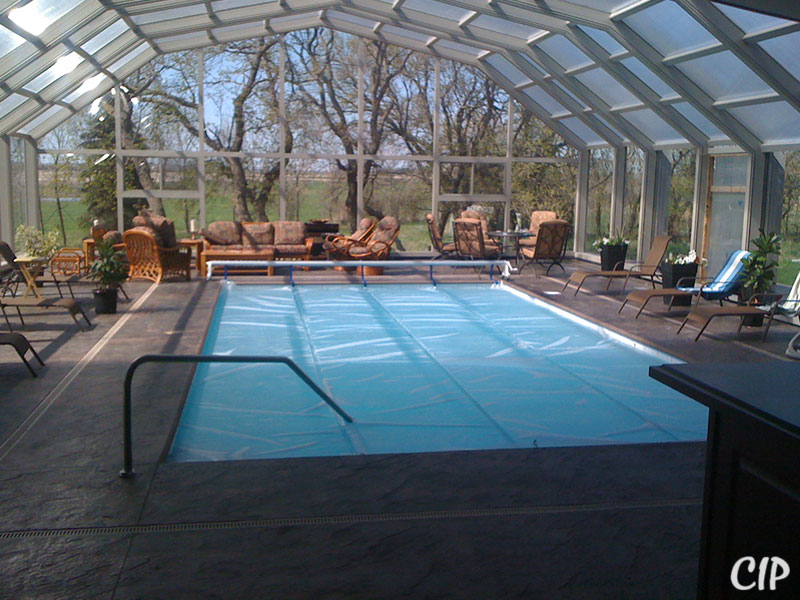
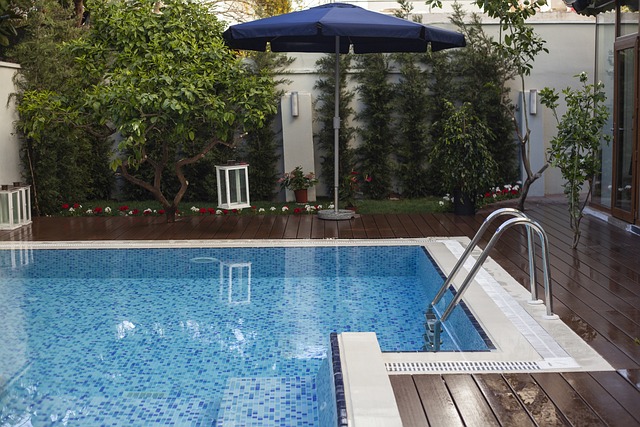
Indoor Pool Enclosures Cost
Covers in Play approach favors precision-engineered aluminum enclosure systems that echo the crisp lines of a modern glass solarium while integrating cleanly with new or existing homes. Aluminum doesn’t rot or warp, and paired fasteners and trims resist corrosion so the structure won’t become a maintenance burden. Because the enclosure itself manages moisture effectively, many projects do not require a large dehumidification system. Where desired, a compact dehumidifier or efficient exhaust can be added to trim operating costs even further.
Budget snapshot: with an aluminum enclosure, building an indoor pool (and enclosure) often totals $70,000–$200,000 depending on size and specification, frequently $70–$120 per sq ft. Even when you add a small dehumidifier or powered exhaust, it’s usually well under 1% of the total project cost far below conventional mechanical plant expenses.
Glazed acrylic or glass infill admits abundant daylight without inviting humidity headaches. Add operable windows or sliders for cross-breezes, and consider retractable pool enclosures to open the space on warm days giving you the best of both worlds: open-air summer living and cozy winter swims.
Why does Building an indoor pool with an enclosure reduces lifetime costs?
Purpose-built enclosures minimize corrosion risk, stabilize temperatures, curb evaporation, and reduce chemical driftslashing ongoing spend versus traditional assemblies. Over time, fewer repairs, lower energy use, and cleaner air quality compound into meaningful savings. Build an indoor pool that is efficient waydurable, elegant, and cost-aware. For a personalized concept and pricing, talk with our design team.
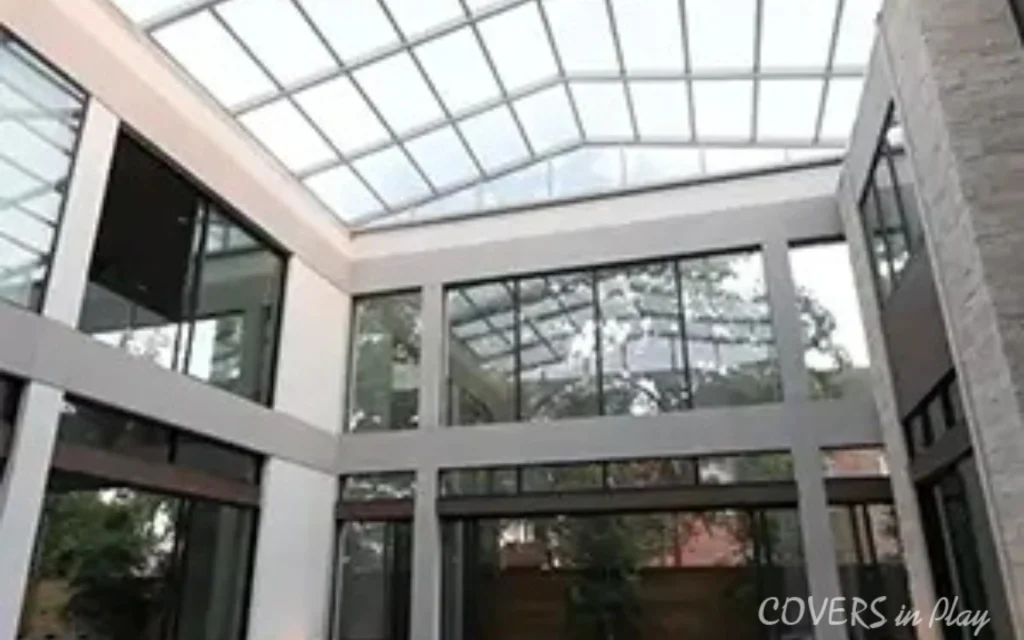
Building an indoor pool for Easier Maintenance
An indoor environment dramatically cuts debris on leaves, branches, or wind-blown grit. The result is less skimming, fewer vacuum cycles, and more consistent water chemistry. For many homeowners, building an indoor pool represents the pinnacle of at-home hospitality: hotel-style comfort, privacy, and year-round access delivered in a refined architectural package.
Building an Indoor Swimming Pool VS an Outdoor Swimming Pool
Structurally, indoor and outdoor pools share similar shells and equipment. The critical difference is deck drainage: outdoors, decks slope away from the pool to shed runoff; indoors, decks slope toward the pool to keep water off walls and finishes. With aluminum enclosures and corrosion-resistant details, drainage direction becomes a design choice rather than a constraint, freeing the layout to prioritize user flow, sightlines, and furniture zones without worrying about long-term water damage. For homeowners exploring modern enclosure options, a Pool Dome can offer the same controlled environment without committing to a full indoor build.
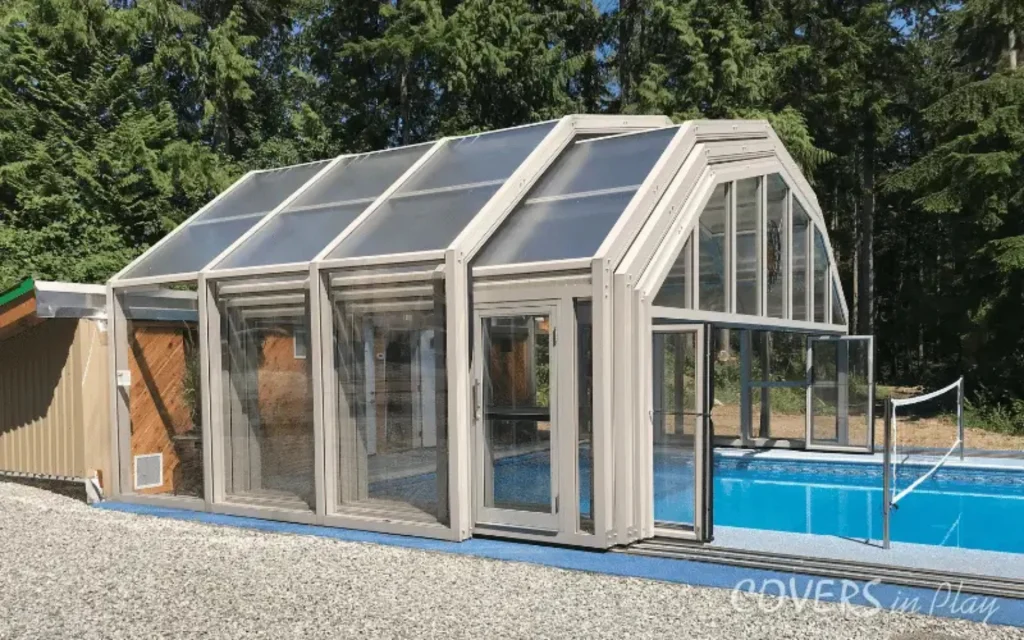
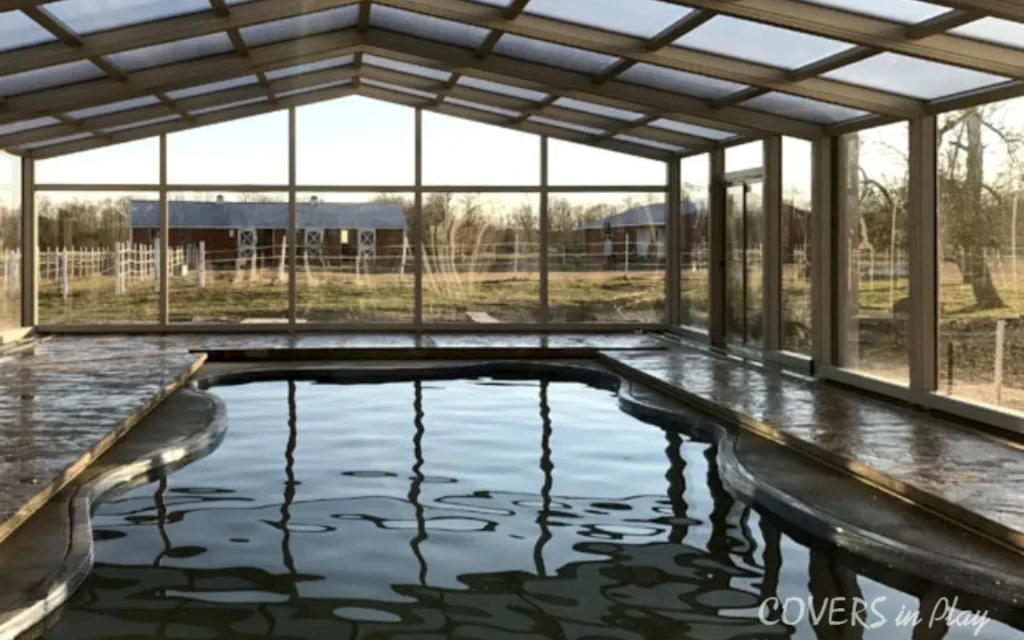
Building an indoor pool for Easier Maintenance
An indoor environment dramatically cuts debris on leaves, branches, or wind-blown grit. The result is less skimming, fewer vacuum cycles, and more consistent water chemistry. For many homeowners, building an indoor pool represents the pinnacle of at-home hospitality: hotel-style comfort, privacy, and year-round access delivered in a refined architectural package.
Build a Indoor Pool With Accessories
Moisture control is mission-critical. An automatic pool cover slashes evaporation, stabilizes water temperature, and reduces chemical consumption helping on both energy and indoor pool enclosures cost. Pair it with an automatic cover reel so deployment takes seconds. Consider LED lighting, anti-corrosion handrails, and insulated equipment pads to keep acoustics and efficiency in check.
Frequently Asked Questions
What is a retractable pool enclosure?
A retractable enclosure is a glazed, engineered structure that slides open or closed on low-friction tracks, letting you enjoy open-air swimming in good weather and fully protected comfort when it’s cold or wet.
What are retractable pool enclosures used for?
They provide year-round usability, control humidity and temperature, reduce debris, and improve safety often at a lower lifetime cost than conventional indoor rooms.
What are the advantages of building an indoor pool?
Consistent comfort, privacy, cleaner water, less maintenance, and season-proof access. For many, building an indoor pool also enhances property appeal and everyday wellness.
How do retractable pool enclosures work?
Lightweight aluminum frames with glazed panels roll along embedded or surface tracks. Sections stack neatly to create large openings, then seal tightly to manage air and moisture when closed.
Can pool enclosures be used all year round?
Yes. Insulated glazing options, controlled ventilation, and modest heating allow comfortable swimming in every season even in colder climates.
How do I open the retractable pool enclosure?
Most systems use manual assist or motorized drives. Panels unlock and glide along the track; with motorization, a wall switch or remote handles the movement.
Can retractable pool enclosures go over an existing swimming pool or patio?
Often, yes. A site assessment confirms foundation capacity, clearances, and tie-in points. Many projects retrofit cleanly with minimal disruption.
How long does it take to order and install an indoor pool building?
Lead times vary by size and customization. Typical timelines run several weeks for engineering and fabrication, followed by a focused installation window once foundations are ready.
Can I build my pool now and add an enclosure later?
Absolutely. Plan the enclosure footprint and footings up front, run electrical conduits, and set elevations so the later addition integrates seamlessly.
Is there a type of swimming pool that would work best in indoor pool buildings?
Most shell types workgunite, fiberglass, or steel-walled vinyl. The key is pairing the pool with corrosion-resistant finishes, balanced ventilation, and adequate access for service.
When building an indoor pool, are there accessories I should consider?
Yes: automatic covers and reels, high-efficiency heaters or heat pumps, variable-speed pumps, LED lighting, and air-quality sensors all of which reduce operating cost and elevate comfort.